


I have run four turnarounds: Bild.de, DocMorris and two IT companies. A new leader with a sense of urgency can change a lot, and fast. I now observe the same thing from the board of NASDAQ-listed Tucows, which is deleveraging with speed and quality of execution.
But sense of urgency is often missing from the big industrial players. Anyone who has been to China recently knows that our business model in Europe has evaporated. Industry leaders are right to point to the prohibitive costs of energy and the high cost of labour. They talk less about what is in their own hands.
Let’s take the obvious example of the German car industry. The same applies outside Germany and in other industries.
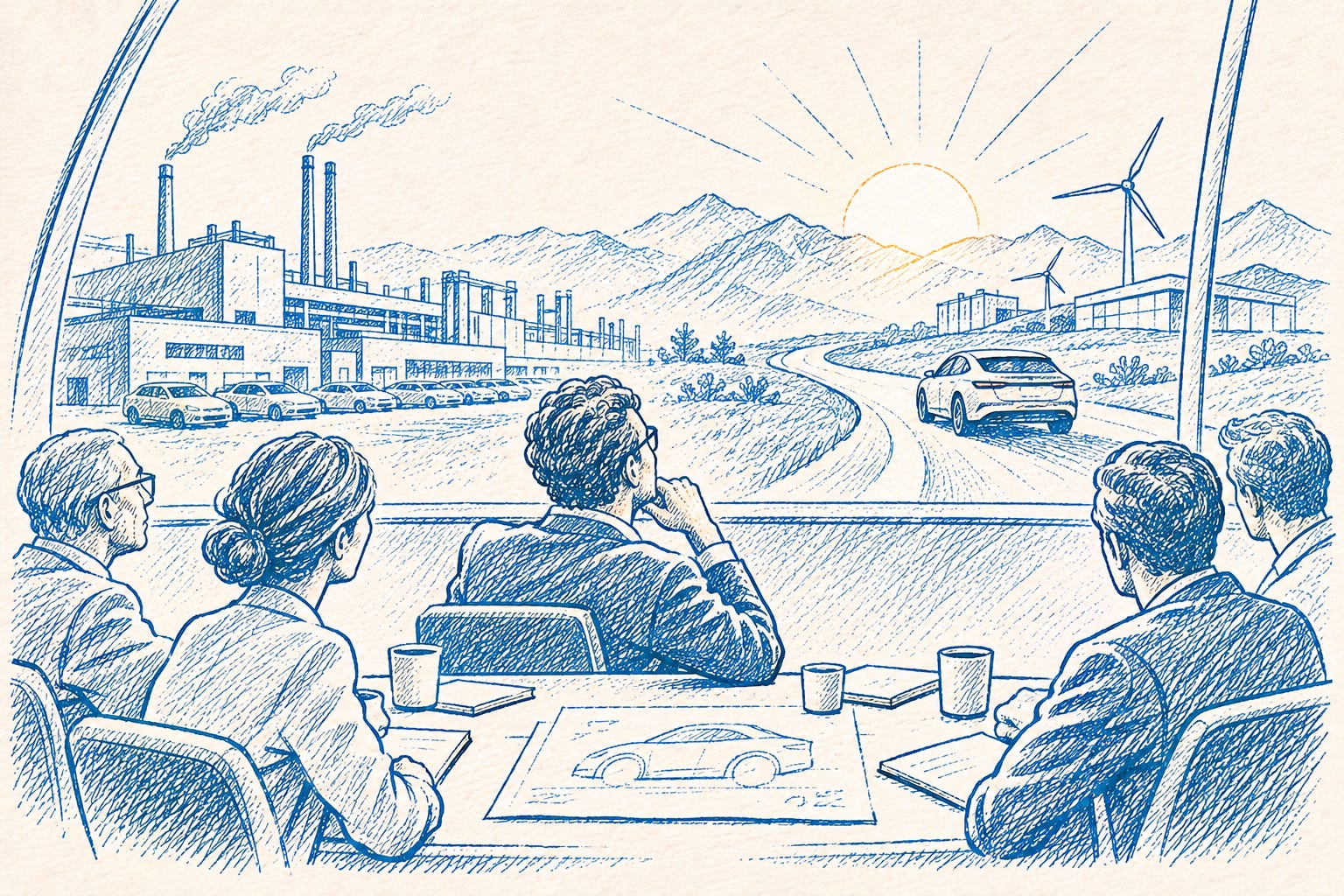
For decades the worker in a German Volkswagen plant was subsidised by colleagues in the Czech Republic, Spain and Hungary, whose Skodas, Cupras and engines made the group profitable. Then came a lucky decade in China. At the peak the joint ventures there earned Volkswagen some €5bn a year. China did the same for Mercedes and BMW. That money is gone for good.
The good years paid for comfort: a 35-hour week, high pay and close to three weeks of sick leave a year. Volkswagen has now terminated most of its house wage agreements, and its chief executive wants a longer week for the same pay. Mercedes has halted new investment in Germany. Capital goes where it earns a return.
The carmakers were slow to adapt to EVs. Yet, their latest generation of EVs is really good: 800V tech from Mercedes, Audi and Porsche is leading, and cars like ID.Polo become more attractive and cheaper and are hence sold out. But profits will not come back with them:
Batteries have to be bought from a few suppliers, and bloat sits in every layer of these companies.
Bloat is visible everywhere, even without setting foot in a single office:
Models and options. In Germany, every conceivable vehicle size comes as a saloon, a coupé, an estate and an SUV. The Volkswagen brand alone lists 8 SUVs and crossovers. Basic features are extras, sold in incomprehensible bundles. A premium model offers seven different seat fabrics, and somewhere a committee meets to choose them.
Technologies. BMW has built hydrogen prototypes for nearly half a century. Not one reached series production. The next X5 is planned with five drivetrains: petrol, diesel, plug-in hybrid, battery and hydrogen. Is anyone surprised when such a car costs €120,000 against competition at €70,000?
Software. Chips and operating systems are mixed and matched, while in reality most will build in the end on a stack from Nvidia and Android. Volkswagen still created Cariad, with billions of losses, as each department claimed its own feature set. Not sure if Rivian will solve this at a $5.8bn price tag.
The reality will mean: fewer models, fewer options, lower cost and high quality. Likely produced around the world. Coupled with brand heritage, a great feel and renewed pride.
Cutting 10% of something never works. You have to make tough decisions about where you really want to compete in the future. I have done this repeatedly. In one company, we cut the number of core activities from six to two and it thrived.
It will also mean bringing AI into every step of the value chain, fast: design, production, sales. I know more than one company where the works council is blocking the company’s use of AI. That costs the jobs it is meant to protect. I don’t envy management and boards who have to go against that sentiment. I might do a separate post about ‘shift left’ in the future. You need to be productive in AI yourself to be able to guide others.
Speed of change is the deciding factor. The companies will be smaller, but they can only survive as companies if these changes are made much faster than in the past.
Otherwise the brands will become badges on Chinese companies.